


Your Vision, Delivered
Say hello to the real experience!
Bring your next event to life—guided by experience, innovation, and excellence.
Let’s create together


19 Aug 2026
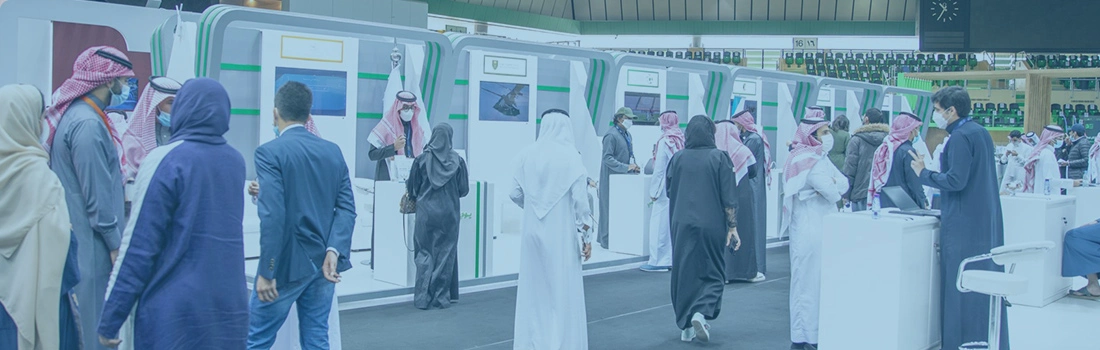
A trade exhibition is one of the most powerful platforms for showcasing products, reaching the right audience, and driving business growth across sectors. In Saudi Arabia, trade exhibitions are also key contributors to Vision 2030, supporting economic diversification, international trade, and innovation.
According to data released by the Ministry of Commerce, the Kingdom has experienced significant growth in both the number and quality of trade exhibitions. In 2021 alone, 1,038 trade exhibitions were held, marking a 17% increase compared to the previous year. Attendance surged to 3,456,789 visitors, a 23% rise over 2020. These numbers highlight the growing demand for professional trade exhibition management, exhibition planning, and trade show management services.
Whether you are a business owner, marketer, or event professional, understanding how to plan and manage a successful trade exhibition is essential. This guide covers everything from exhibition planning and exhibitor management to visitor management, booth management, lead generation, and post-event analytics.
A trade exhibition is a focused business event that brings together exhibitors, visitors, sponsors, and industry professionals in a single venue. Its purpose is to promote trade by enabling buying, selling, product demonstrations, and B2B networking.
Unlike consumer fairs, a trade exhibition is designed primarily for business audiences. It gives companies a platform to present products and services, meet potential partners, and generate qualified leads through direct engagement.
Trade exhibitions play a critical role in the world of trade and marketing because they:
For organizers, effective exhibition management means coordinating exhibition logistics, exhibition production, visitor management, booth management, and on-site operations to create a seamless experience for all participants.
Read More: How to Organize a Successful Conference in 7 Steps
The French writer Antoine de Saint-Exupéry wrote, “A goal without a plan is just a wish.” This is especially true in trade exhibition management. A clear, structured plan is the foundation of any successful trade show.
Here is a five-step exhibition planning framework that aligns your event with clear business objectives.

Start by defining SMART objectives for your trade exhibition. Determine whether your primary goals are:
Clear objectives guide every other decision in the exhibition planning process, ensuring that exhibitor management, marketing, and venue design all support measurable outcomes.
Once your goals are set, identify the specific visitors, exhibitors, sponsors, and media attendees you want to attract. A strong target audience profile may include:
Understanding your audience allows you to tailor your trade show management strategy, ensuring that promotional efforts reach the right people and maximize lead generation.
Budgeting is one of the most critical parts of exhibition management. Your budget should cover:
Proper exhibition planning helps prevent cost overruns and ensures that every element of the event is delivered on time and to standard.
Choosing the right venue directly affects visitor satisfaction and exhibitor performance. Look for a venue that offers:
A well-chosen venue supports attendee flow, brand visibility, and overall exhibition production quality. This is especially important for international exhibition management and multi-city trade shows.
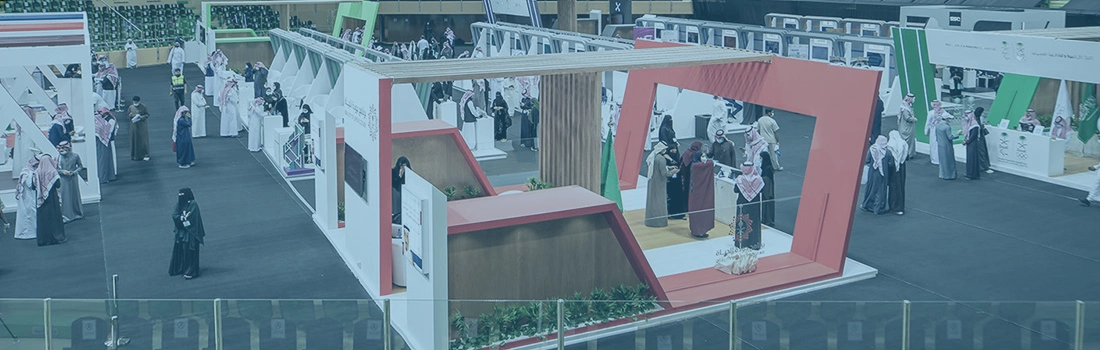
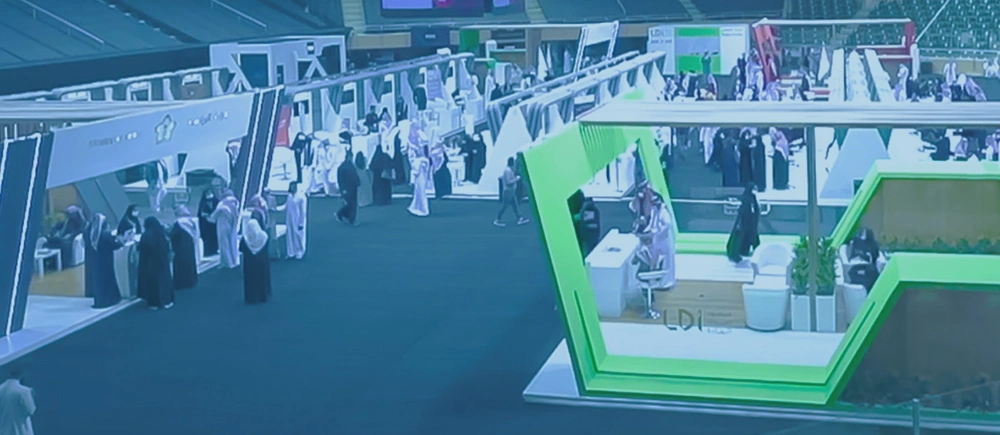
Your exhibition layout should be strategic. Effective booth management and floor planning improve navigation and increase engagement.
Use clear signage, branded colors, and themes that match the exhibition topic. Divide the floor into industry zones such as technology, food, fashion, or manufacturing so visitors can easily find relevant exhibitors.
Leave enough space for movement, interactive displays, and one-to-one B2B networking. A visitor-friendly layout turns interest into conversations and conversations into qualified leads.
For example, when designing a trade show, you could create sections based on different industries, such as food, technology, fashion, and more. This approach helps visitors navigate the event and easily identify the areas that interest them most. By making it easier for visitors to explore the exhibited products and engage with the exhibitors, this type of sectioning ultimately enhances the overall experience of attending the trade exhibition.
After planning, strong execution separates average trade shows from exceptional ones. These trade exhibition management best practices improve exhibitor management, visitor management, and on-site lead generation:
It is essential to train the participating team on the specific details and desired objectives of their participation. Ensure that all team members understand the brand message and are capable of effectively communicating with visitors. Guide them on how to handle common questions and potential challenges they may face during the event. Additionally, having a contingency plan in place to address any potential issues that may arise during the trade exhibition is essential to ensure its success.
To create an engaging trade exhibition, it is important to organize presentations and activities in a structured manner. This can include conducting product demonstrations and showcasing your brand's services. Hosting workshops for children and interactive activities for visitors can also enhance the experience. Creating a schedule for these events ensures that visitors can easily participate and enjoy an interactive experience.
It is essential to provide interactive activities and special offers that capture their attention. For instance, offering free trial demonstrations or exclusive discounts can help visitors feel that they are receiving genuine value from their participation in the trade exhibition. By providing such incentives, you can increase visitor engagement and encourage them to interact with the exhibitors, ultimately enhancing the overall success of the trade exhibition.
Create data collection forms to document customer communications and follow up after the event. Leverage this information to build relationships, send information, and provide special offers to enhance customer engagement and increase your customer base.
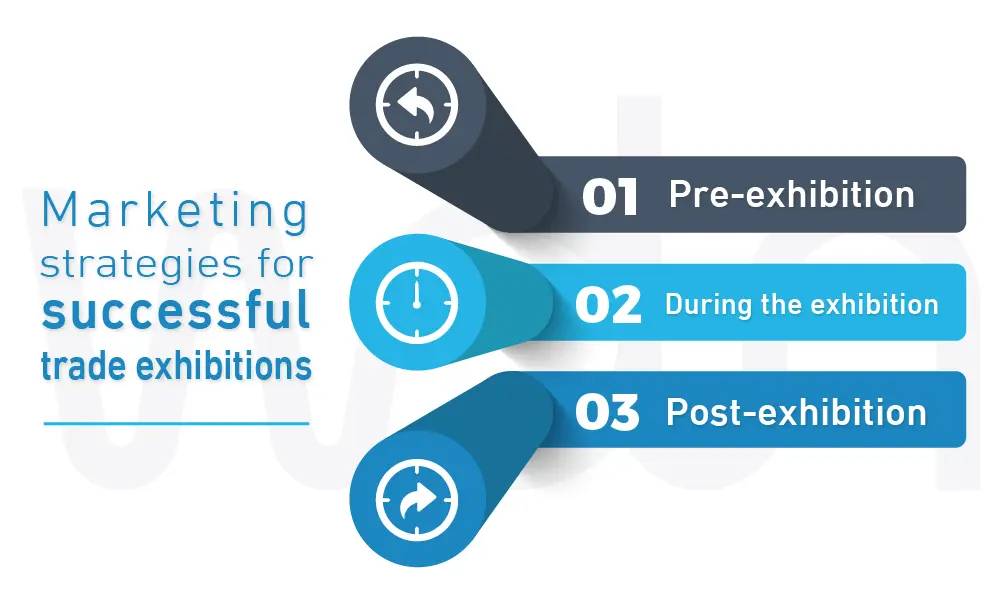
To ensure the success of a trade exhibition, it is crucial to implement effective marketing strategies. Here are some important strategies that can be adopted to attract the audience:
Read More: SMART goals: How to Successfully Achieve Your Event Objectives
Evaluating the performance of trade exhibitions is essential for their future development. This evaluation provides valuable insights and solid evidence that can help improve the exhibition's outcomes and enhance its effectiveness. To achieve progress and boost the exhibition's performance, various methods and techniques can be utilized.
Prepare a survey for website visitors that includes questions about their browsing experience, reason for visiting, content satisfaction, website design, and ease of navigation. You can use online survey creation tools such as SurveyMonkey or Google Forms to create the survey and gather responses. Ensure that visitors are encouraged to answer the survey honestly and accurately.
After collecting the data and feedback, it is essential to analyze it to identify the strengths, weaknesses, and opportunities for improvement. The analysis should include the conversion rates, visitor and participant satisfaction levels, and the most effective marketing channels for the event. By conducting a thorough analysis, you can gain valuable insights and make informed decisions to enhance the event.
Based on the insights gained from the analysis, it is possible to create a comprehensive plan to improve future trade exhibitions. This plan could cover several areas, including enhancing marketing and promotional strategies, improving visitor experience, and increasing participation and sales.
Once the plan is developed, it is crucial to actively execute it to achieve the desired outcomes. It is important to carefully monitor the results and document all the steps taken to benefit from them in the future.
By following these steps, you can continuously evaluate and improve your trade exhibitions, establishing a strong foundation for their success. It is important to remember that the evaluation process requires ongoing effort, and thus, you should be prepared to adapt and adjust your approach based on new data and dynamic market changes.
In conclusion, after reviewing the key factors and fundamental steps for organizing and planning trade exhibitions, these events are a fantastic opportunity for companies and organizations to showcase their products and services and engage with potential customers and partners. However, to ensure the success of these events, it is essential to choose a suitable partner to manage and organize the exhibitions.
This partner should provide integrated and innovative solutions to create an exceptional event that meets your needs and satisfies your visitors. In this regard, we are proud to say that WOTN is the ideal partner for managing and organizing your trade exhibition.
Our team is committed to every aspect of the event, from ideation to evaluation, and we leverage the latest technologies and best practices to ensure the realization of your vision and objectives. By partnering with us, you can rest assured that your trade exhibition will be a success that captures the attention and admiration of your visitors. Contact us now to learn more about our services and how we can assist you in launching a successful trade exhibition.
Share


Say hello to the real experience!
Bring your next event to life—guided by experience, innovation, and excellence.
Let’s create together
